Traffic Systems Operations
CET 590 · University of Washington
Teaching philosophy
I design engaging and inclusive learning experiences that make complex transportation concepts accessible, connect fundamentals to current tools, and help students build confident, successful futures in engineering.

Instructional experience
I have instructed graduate Traffic Systems Operations (CET 590) at the University of Washington, as well as Highway Geometric Design and Civil 3D training at the University of Tehran.
CET 590 · University of Washington
University of Tehran
University of Tehran
My teaching statement
My goal is not only to teach a method, but to help every student develop the confidence, judgment, and curiosity to use it well.
I see teaching as helping students become confident, curious engineers—not simply delivering information. I combine clear explanations, visual intuition, worked examples, questions, and hands-on activities so difficult concepts become approachable without losing their technical rigor.
An effective classroom must also be inclusive and welcoming. Students bring different backgrounds, experiences, and ways of learning, so I use multiple ways of explaining ideas, collaborative problem solving, transparent expectations, low-stakes participation, and timely feedback. Every student should feel respected, supported, and able to contribute.
Transportation is changing rapidly. Alongside enduring engineering fundamentals, I want students to encounter current data, simulation, artificial intelligence, smart sensing, and digital-twin concepts. Connecting these tools to real agency and community decisions helps students understand why the field matters, discover what excites them, and prepare for meaningful careers.
Learning design
Build understanding step by step with visual explanations, worked examples, and repeatable problem-solving methods.
Use discussion, authentic cases, demonstrations, and hands-on work so students participate in constructing knowledge.
Create a welcoming classroom with multiple ways to engage, transparent expectations, and support for different learning paths.
Pair core engineering judgment with emerging tools so students can enter a changing profession with confidence and purpose.
Student feedback · CET 590
Median across four global course-quality items
Every respondent rated the instructor’s contribution as Excellent.
Every respondent rated encouragement to express themselves as Excellent.
Every respondent rated availability of extra help as Excellent.
Workforce development
My workforce-development research extends the same philosophy beyond a single course: education should help people adapt, contribute, and lead as transportation practice evolves. In an ongoing Washington study, 47 employer surveys and 917 practitioner surveys reveal both a retirement-driven succession challenge and a need for stronger early-career pathways.
Employers and practitioners converge on hands-on learning, meaningful internships and apprenticeships, stronger industry–academia partnerships, and earlier exposure to emerging tools such as AI-enhanced design and LiDAR surveying. I translate that evidence into the classroom by connecting technical foundations to real project decisions, current technologies, communication, teamwork, and ethical public responsibility.
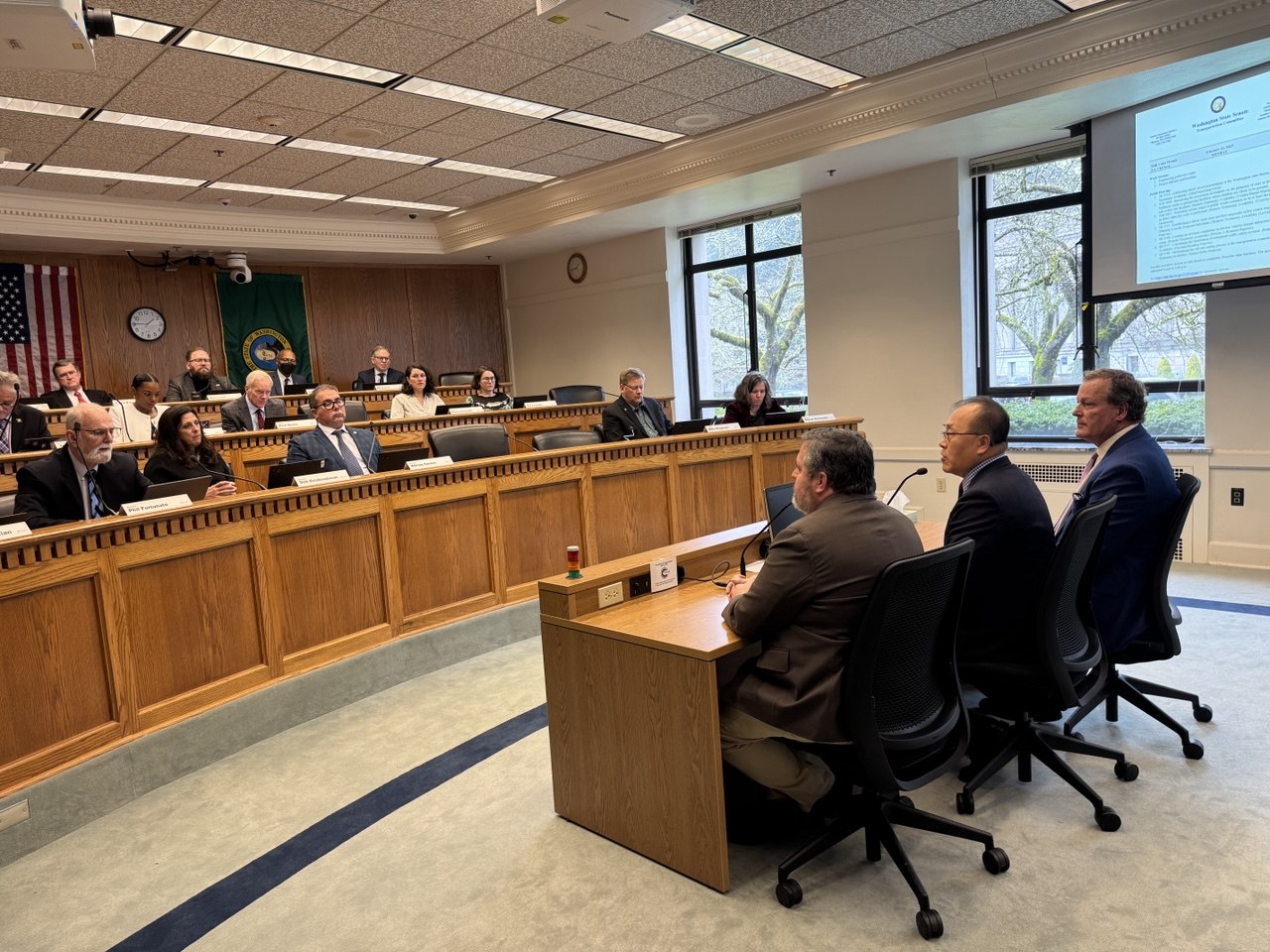
Research into public service
Our presentation connected statewide employer and practitioner findings with questions about preparation, succession, skill gaps, and the future of Washington's transportation workforce.
View the presentation story ↗